
Tuleyome's Policy Corner - Molok Luyuk End of Year Summary 2022
Sandy Schubert • December 29, 2022

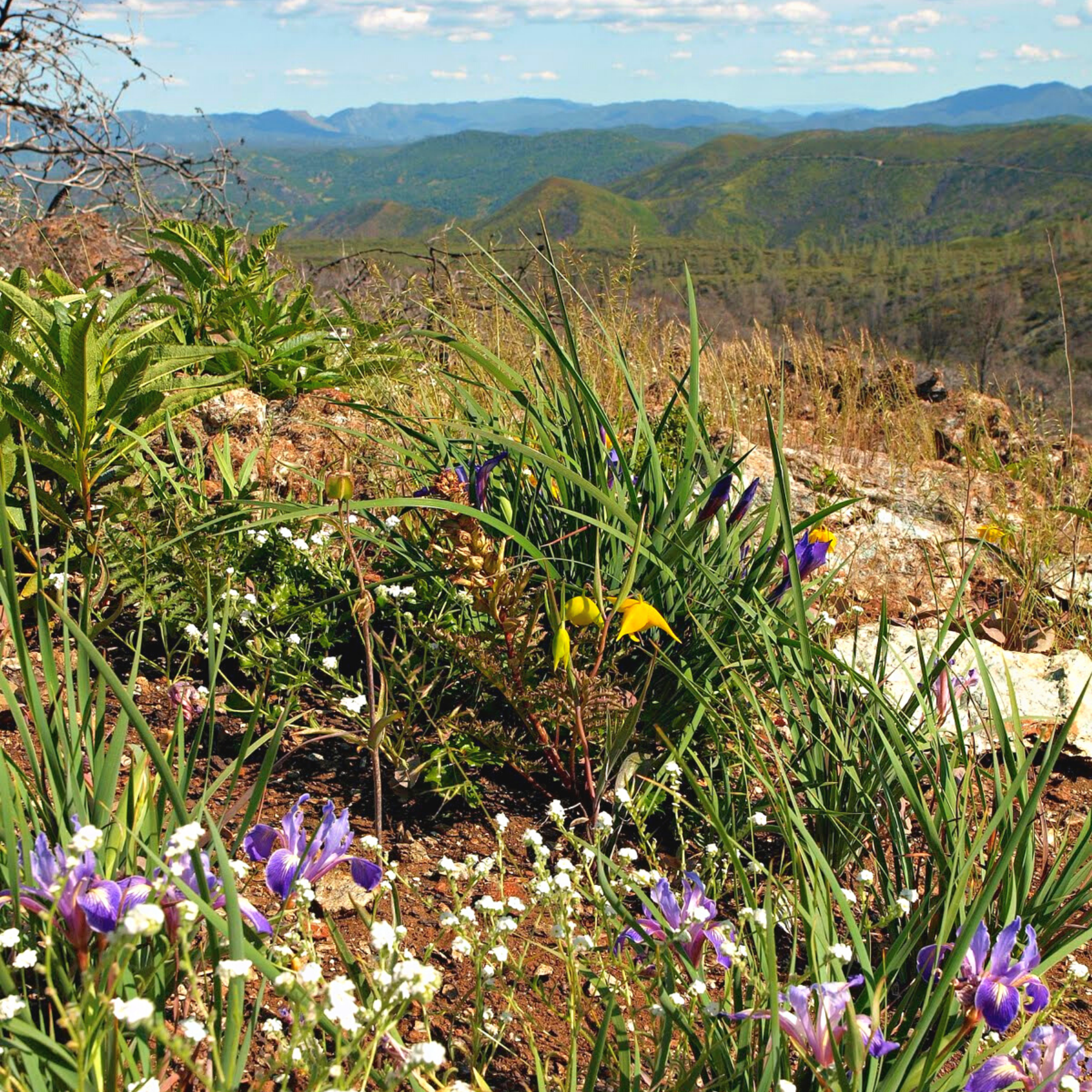
Protecting Molok Luyuk and ensuring tribal co-stewardship advanced considerably. The Berryessa Snow Mountain Expansion Act was introduced by Representatives Garamendi and Thompson (HR 6366), then followed by Senators Padilla and Feinstein (S 4080). Both the Senate and House of Representatives held positive hearings on the bills. BLM, the current land manager of Molok Luyuk, supports the bills. It is supported by community members and public officials at all levels of government – local, state, and federal. It passed out of the House as an amendment to the National Defense Authorization Act, and out of the Senate Energy Committee by unanimous, bi-partisan vote. We were hopeful that the Act would be added into a public lands package or the Omnibus Appropriations bill that passed last Friday due to its overwhelming and bi-partisan support. While many had hoped for a passage of bi-partisan public lands bills at the end of the year, it did not happen.


However, we have made significant progress and continue to build support. Our champions will need to introduce legislation in 2023, in the new session of Congress. We will need to work with President Biden, Secretary Haaland, and our partners at BLM to protect this special place and all that it holds. Our Senators and Representatives have already written to the President asking him to protect Molok Luyuk through the Antiquities Act if Congress does not take action. This request was also made by the Yocha Dehe Wintun Nation, whose ancestral lands include Molok Luyuk. Tuleyome and a coalition of dozens of organizations support these requests.


And, we are hopeful. President Biden has committed to protecting 30 percent of public lands and waters by 2030. A new report by the Center for American Progress shows that in the first two years of the Biden administration, President Biden has moved to conserve over 12 million acres of public lands and has funded over $10 billion in federal, state, local, and Tribal conservation efforts, three times more than any previous president at this point in office. He restored the boundaries of three national monuments – Bears Ears, Grand Staircase Escalante, and Northeast Canyons and Seamounts National Monuments – where tribal co-stewardship of the land is underway. President Biden already designated the Continental Divide National Monument in Colorado, and has committed to designating Avi Kwa Ame in Nevada as a national monument. Now it’s time to protect Molok Luyuk.

How can you help? There are many ways.


  • Send a letter of support to the President, letting him know you want him to protect Molok Luyuk. Individual letters are always best. Here’s a sample in case it’s helpful. If you do send your own letter, please share it with Tuleyome – we are gathering up support.
  • If you’re an organization or a business, you can sign on to our organizational support letter.
  • If you’re just too swamped to do that, then sign our petition in support of Molok Luyuk.
  • If you have extra time and want to volunteer, contact us!


We can make this happen – with your help – in 2023!


Until then, have a Merry New Year!


Cheers, Sandy


Executive Director


RECENT ARTICLES
By Bryan Pride January 20, 2026
Last year tested us. We watched as the administration attempted to auction off millions of acres of public lands, an unprecedented attack on places we’ve fought to protect for decades. We saw rollbacks of critical environmental protections and threats to lands that belong to all of us. But we also showed up. Together, as a community, we rallied, we organized, and we pushed back against some of the most aggressive land sell-offs ever proposed. And we won some of those fights. In December, just before Congress recessed, Senator Padilla introduced the Protecting Unique and Beautiful Landscapes by Investing in California (PUBLIC) Lands Act , a beacon of what’s possible when we refuse to give up. This isn’t just another bill. It’s a statement that California is refusing to let our public lands become bargaining chips. The PUBLIC Lands Act would protect over 1.7 million acres of California public lands throughout northwest California, the Central Coast and Los Angeles County. That protection includes 550,000 acres of new wilderness and nearly 700 miles of wild and scenic rivers. It includes provisions for forest restoration and fire resilience on another 871,000 acres, work that is desperately needed. This package pulls together three essential bills: Congressman Huffman's Northwest California Wilderness, Recreation and Working Forest Act , which protects 484,733 acres and 479.8 miles of rivers, old-growth forest, salmon streams and wild places that define the North Coast. Representative Carbajal’s Central Coast Heritage Protection Act secures 385,842 acres including critical habitat in Los Padres National Forest, home to California Condors and threatened watersheds. Representative Judy Chu’s San Gabriel Mountains Foothills and Rivers Protection Act that protects 35,335 acres, expanding access to nature for millions of Angelenos who live in communities with some of the lowest park access in the country despite having mountains right in their backyard. The PUBLIC Lands Act matters because it’s happening now when our public lands face their greatest threats. Our champions in Congress aren’t waiting for a better political moment, they’re fighting for these places when the fight matters most. We will be tracking this bill closely and keeping you updated as it moves through Congress. In the meantime, call your representatives and thank Senator Padilla , Representative Huffman , Representative Carabajal and Representative Chu for introducing this legislation. Let them know you support it. Our voices help move good legislation through Congress, especially when the opposition is loud. If 2025 taught us anything, it's that defending our public lands isn’t a one-time battle. It’s the work we do together, every single day. Bryan Pride Tuleyome Policy Director
By Kristie Ehrhardt January 20, 2026
It’s true! Tuleyome’s Adventures and Engagement Director Nate Lillge has assembled an incredible guide to the trails located throughout the southern portion of our newly expanded favorite monument. As you may know, the monument is jointly managed by both the Bureau of Land Management (under the United States Department of Interior) and the United States Forest Service (under the United States Department of Agriculture). The two agencies collectively manage and maintain 344,476 acres of natural wildlands in the Inner Coastal Range available for the public to appreciate and explore. That’s where Tuleyome comes in, we want to help you traverse and investigate those acres. Tuleyome’s trail guide not only provides a map of the southern portion of the monument with the trailhead names and locations, but it also shows names of the various trails that can be accessed by those trailheads along with the difficulty rating. It also contains a QR code that will take you to detailed information for each trail, including driving directions, trail maps and hike descriptions. If you’d rather go with a group, Tuleyome can help there too. Check out the Upcoming Events tab on our website to register for one or more of our organized hikes. So, if your New Year’s Resolution was to get out on more hikes in 2026, Tuleyome’s got you covered! Check out the Trail Guide here or look for our booth at one of the many community events that we participate in and pick up a printed copy. And don’t forget about our Youth Boot Bank program if your little hiker needs to borrow some boots; just come see Tuleyome’s Education Associate, Geoff Benn, during Boot Bank office hours, which are also listed under the events tab, and we’ll get your little ones outfitted for the trails too. Happy Hiking!!  -Kristie Ehrhardt ( kehrhardt@tuleyome.org ) Tuleyome Land Conservation Program Manager
By Kristie Ehrhardt January 20, 2026
Stretching from the Bering Straight off the coast of Alaska south to majestic Patagonia, the Pacific Flyway is one of the paramount migratory pathways in the entire world. Hundreds of species ranging from tiny hummingbirds, songbirds like sparrows and warblers, shorebirds like avocets, sandpipers and whimbrels, waterfowl including many species of ducks and geese to great Bald Eagles combine to equal the billions of birds that use the Pacific Flyway each migration season. With California's mild winters, available wetlands and flooded rice fields, and oodles of food, it’s not hard to see why waterfowl species like the striking white and black Snow Goose spend their winters here. As many as a million and a half Snow Geese will be using the Pacific Flyway and tens of thousands of them will remain here, in our region, for the winter. The City of Chico and surrounding communities come together to celebrate “this magnificent spectacle of nature with the Snow Goose Festival of the Pacific Flyway.” By connecting and showcasing artists, authors, educators, guides and volunteers the festival aims to excite and unite the community by increasing appreciation, awareness, conservation and understanding of the resident and visiting wildlife and their habitats in the Northern Sacramento Valley. The three day festival features art and an auction, a banquet, field trips, family activities and exhibits and workshops! Snow Geese (Anser caerulescens) breed in Greenland, Canada, Alaska and the northeastern tip of Siberia and winter in the warmer regions of southwestern British Columbia, south through the United States and Mexico. There are two color morphs, white which are called “snows” (shocking, I know) and the dark morphs which are called “blues”. Snows are all white with black wingtips while blues have dark bluish-gray plumage and a white head, neck and tip of the tail. Both color morphs have orangy-red legs and feet and a pink bill with black edges that makes it look like they are grinning. Sometimes minerals in the soil or water where they’re feeding can stain their white heads making them look orange. Snow Geese are vocal. Very vocal. Some may say they are extremely vocal and they can often be heard from more than a mile away. Frequently Snow Geese and Greater White-fronted Geese travel together as they are very similar in size and needs. Combined flocks of them can often be heard on winter days and nights as they fly high overhead to their feeding grounds. If you’re looking for a fun way to Enjoy Outdoors and learn more about the Pacific Flyway, Snow Geese and their fellow travelers, venture on up to Chico during the weekend of January 22-25, 2026. They’d love to see you at one of the many events! Please visit the website ( https://snowgoosefestival.org/ ) for a list of activities, to register and for more information. Snow Goose Fun Facts! When Snow Geese are resting or feeding, lookouts keep an eye to the sky watching for threats such as Bald Eagles or other predators which prey on old or injured geese. The lookout will vocalize and the entire flock may spontaneously take flight which is pretty stunning to watch. Snow Goose eggshells stain easily which makes aging the eggs easy, the older eggs will appear dirtier while the more recently laid eggs remain creamy white. Snow Geese populations dropped so low in the early 1900’s that hunting was no longer allowed in the eastern states. From the 1970’s and on, the population has boomed so much that some of their tundra nesting grounds are being impacted by their numbers. Once females arrive at their breeding grounds they may spend up to 20 hours a day foraging but consume nearly nothing once they begin incubating eggs. Snow Goose digestion is remarkably quick, requiring only about an hour or two to go from gullet to ground. Snow Geese make epic journeys by wing but they are not lazy on foot either. Within the first month after hatching, goslings may walk about 50 miles with their parents. When waterfowl molt they lose their ability to fly but a molting Snow Goose can outrun many predators. The oldest known Snow Goose was over 30 years old! Word Play. A group of geese on the ground or water is called a gaggle . That same collection of geese but now in the air are called a skein , a wedge or a team . Hunters use the term “ grind ” for an assemblage of geese while culinary artists use the same term to mean goose meat . BUT, if you simply call them a flock of geese, everyone will know what you’re talkin' about! -Kristie Ehrhardt ( kehrhardt@tuleyome.org ) Tuleyome Land Conservation Program Manager